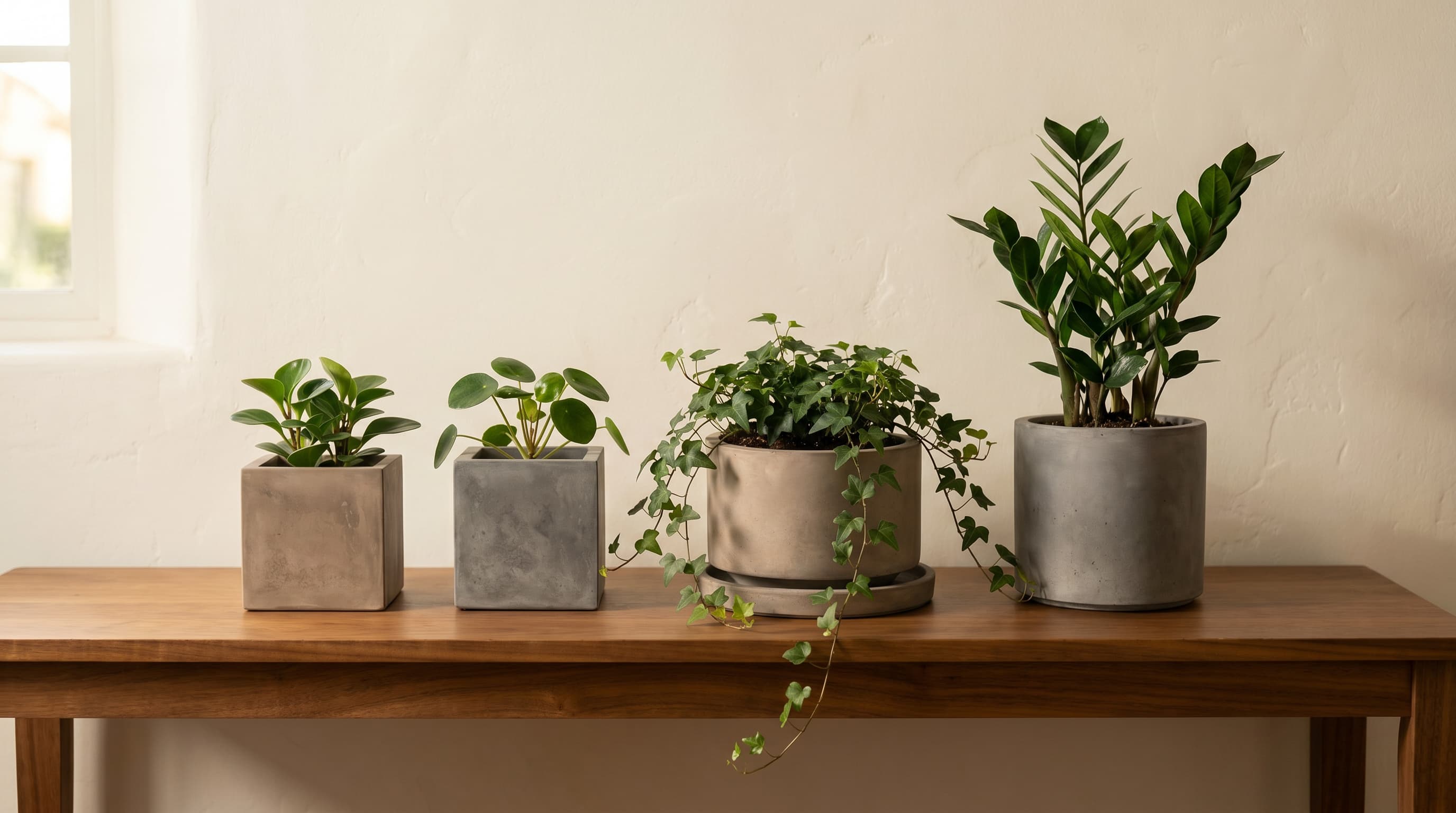
A Living Form vessel is a piece of stone with a hole at the bottom. It does not need much from you. The notes below are what I tell friends when I bring a piece to their kitchen and they ask, very politely, what do I actually do with it.
Planting it up.
A handful of grit or small stones at the base, then your soil, then the plant. The grit keeps the drainage hole from clogging on the day you water a little too generously. Use the same potting mix you would use for a terracotta pot of the same size. Concrete is not picky.
Do not plant directly on the bare bottom of the vessel. The drainage hole works best with a clear path to it.
Watering through it.
Water slowly until you see a little run through the drainage hole. Wait a minute. Empty the saucer. Do not let the vessel sit in standing water for hours, the way you might forgive a glazed ceramic. Concrete is porous; it will hold the moisture and the plant roots may sit wet for longer than they want.
Most houseplants want less water than people give them. If in doubt, push a finger an inch into the soil. If it comes out dry, water. If it comes out cool and damp, wait.
Where it likes to live.
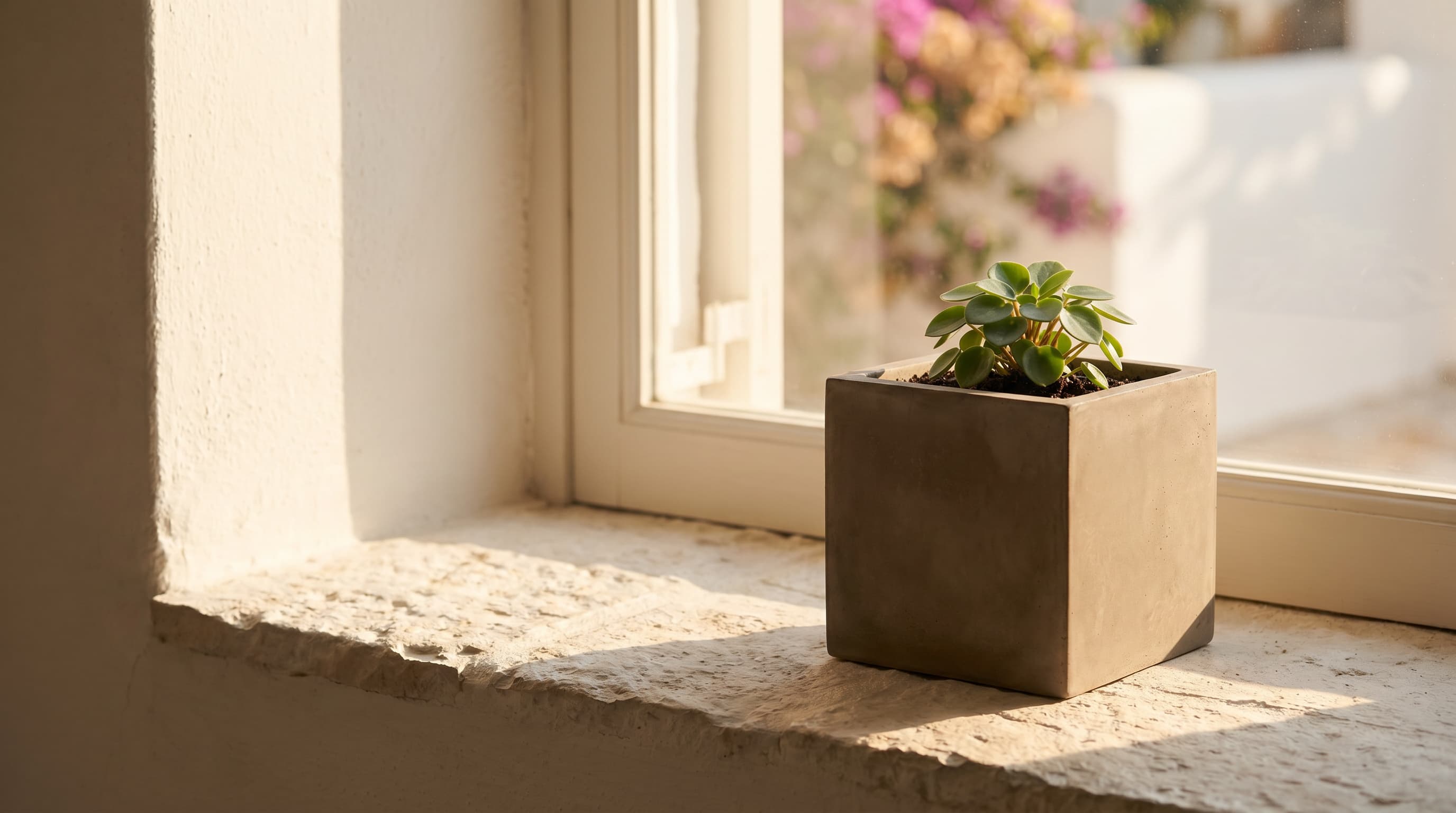
Indoors is fine. Outdoors on a balcony or a terrace is also fine across most of the EU and the UK. The one thing concrete does not love is a hard freeze with water still inside the matrix. Water expands when it freezes, and a sustained freeze can open hairline cracks over time.
If you live somewhere that drops well below zero in winter, bring the vessel inside, or empty it, or move it under cover. In Cyprus, the studio sits at sea level and the pieces stay outside year round.
Cleaning, when it needs it.
A damp cotton cloth. No detergents, no scrubbing pads, no oil. The surface of the vessel has a soft matte that comes from the mould, and any abrasive will dull it. Wait for the surface to be dry before brushing off any dust that has settled.
In the first months, you may see a faint white bloom on the surface. That is mineral leaching, a normal property of fresh concrete. Brush it off dry. It fades on its own.
The patina you will earn.
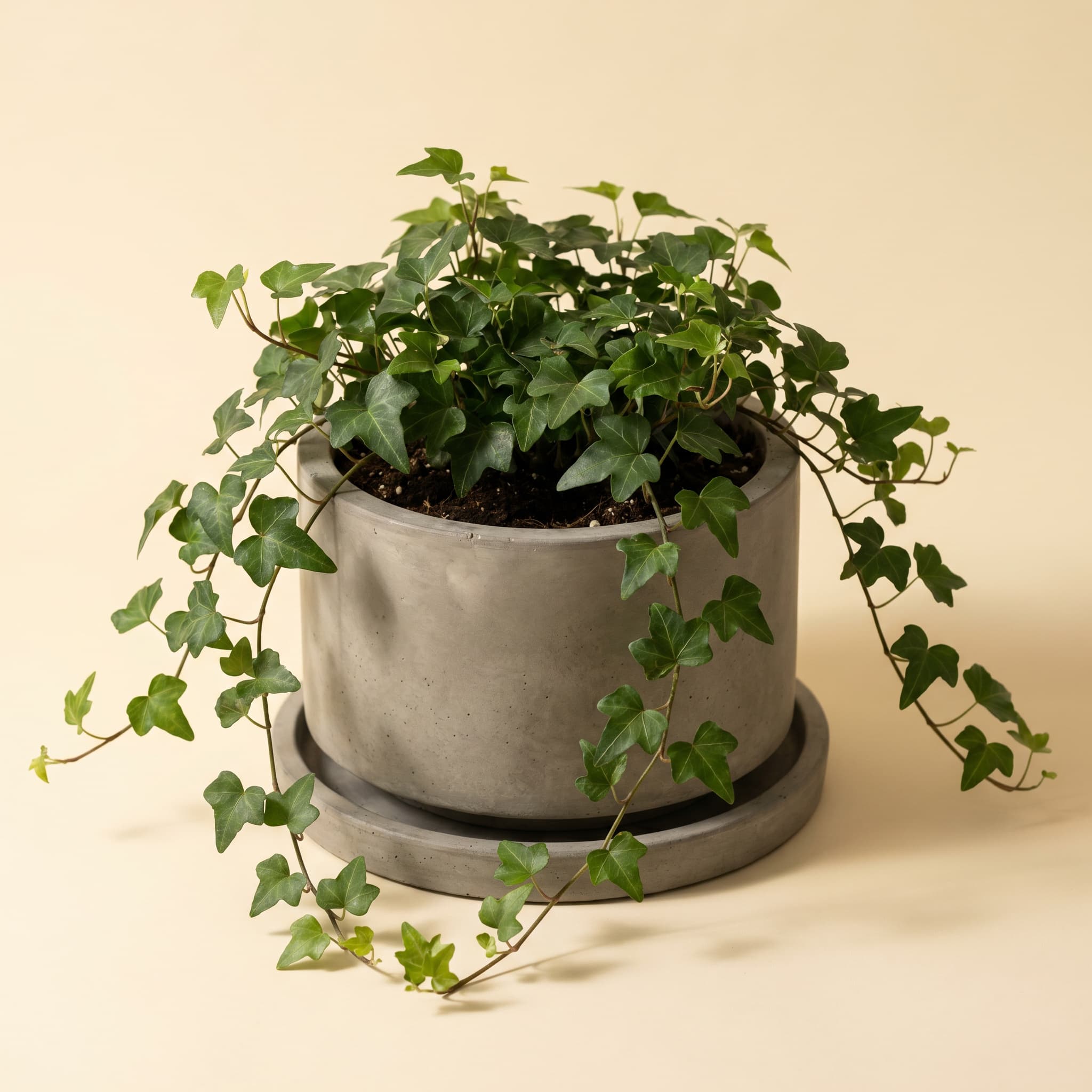
Concrete keeps strengthening for years after it leaves the mould. With handling, the corners will soften almost imperceptibly. Soil splashes and watering may leave a few small marks on the outer wall. None of this is damage. It is the vessel keeping a quiet record of having been lived with.
If a mark really bothers you, a gentle wipe with a damp cloth will take most of it back. Some, you will choose to keep.
What it is not.
A Living Form vessel is not waterproof on the inside. It is a planter, not a vase. Do not pour wine into it. Do not use it for fresh-cut flowers in a deep water bath. The mineral content of the concrete will leach into the water, and the water will sit too long against the inner wall.
Treat it as a small piece of stone with a job. It will outlast almost everything else in the room.
- Rafaella