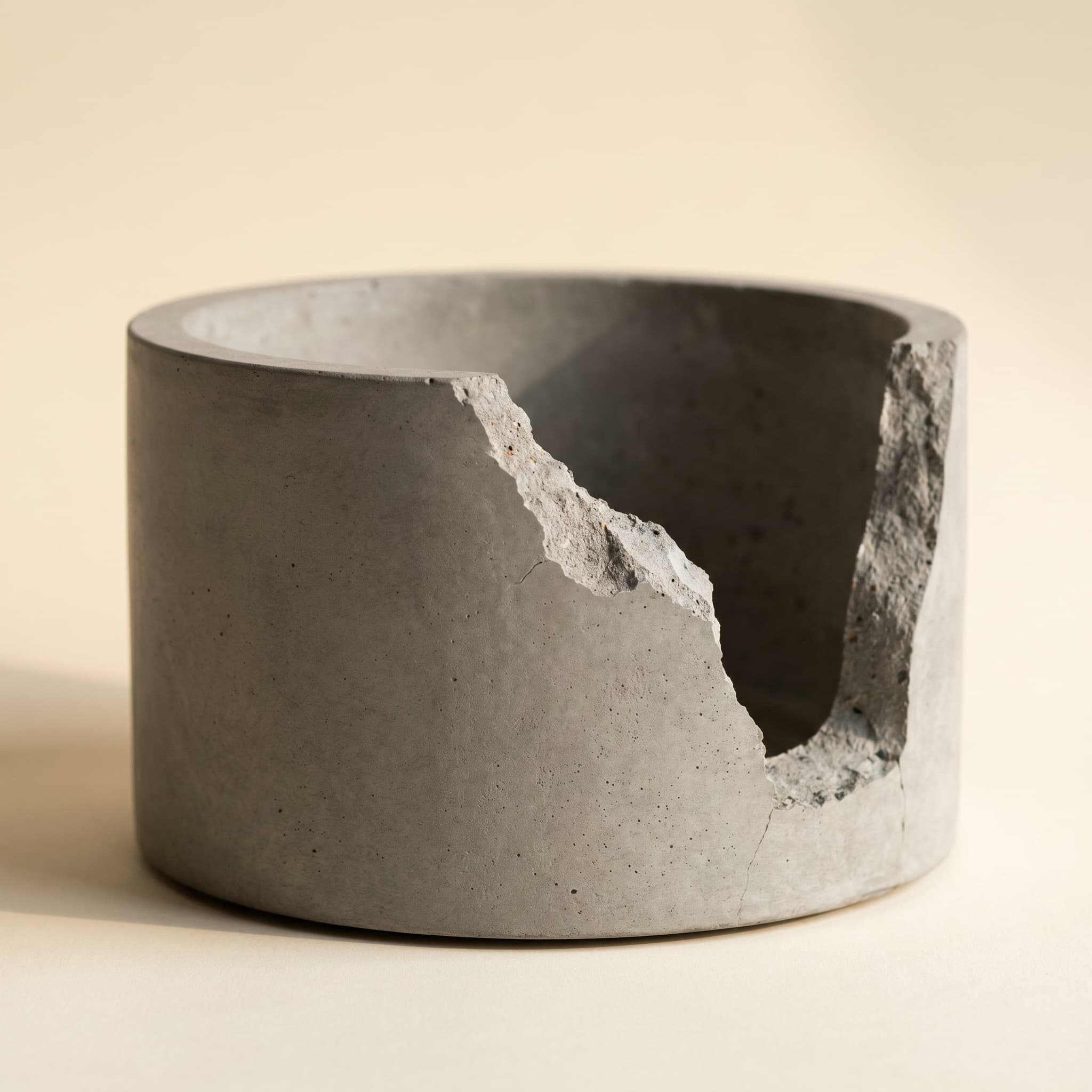
Concrete is a wild material to work with. You mix it by hand, you cast it into a mould, and then you wait. What comes out of the mould two days later is not quite what you put in. The pigment has migrated a little. The slurry has settled. The face that sat against the workbench looks different from the face that caught the air.
These differences are the work. They are not the apology that comes before the work.
Where the variance comes from.
Every batch begins with the same recipe. Cement, fine aggregate, a measured spoon of mineral pigment, water. The pigment is the loud variable. A gram either way changes the tone of the whole batch. The temperature in the studio changes how fast the slurry sets. The humidity changes how the surface skins.
I weigh everything on a kitchen scale. I keep notes. I still cannot tell you in advance exactly what colour the cube will be when it comes out of the mould. That is the honest part.
Across the face of a single piece.
Inside one vessel, the four faces will not be identical. The face that was against the bottom of the mould tends to be the smoothest and the warmest. The face that was exposed to air tends to be a shade lighter and shows a little more grain. The sides somewhere in between.
When you set the piece on a shelf and the light moves across it during the day, you will see those differences. That is intentional. A vessel that looked the same from every angle would look like a moulded plastic copy of itself.
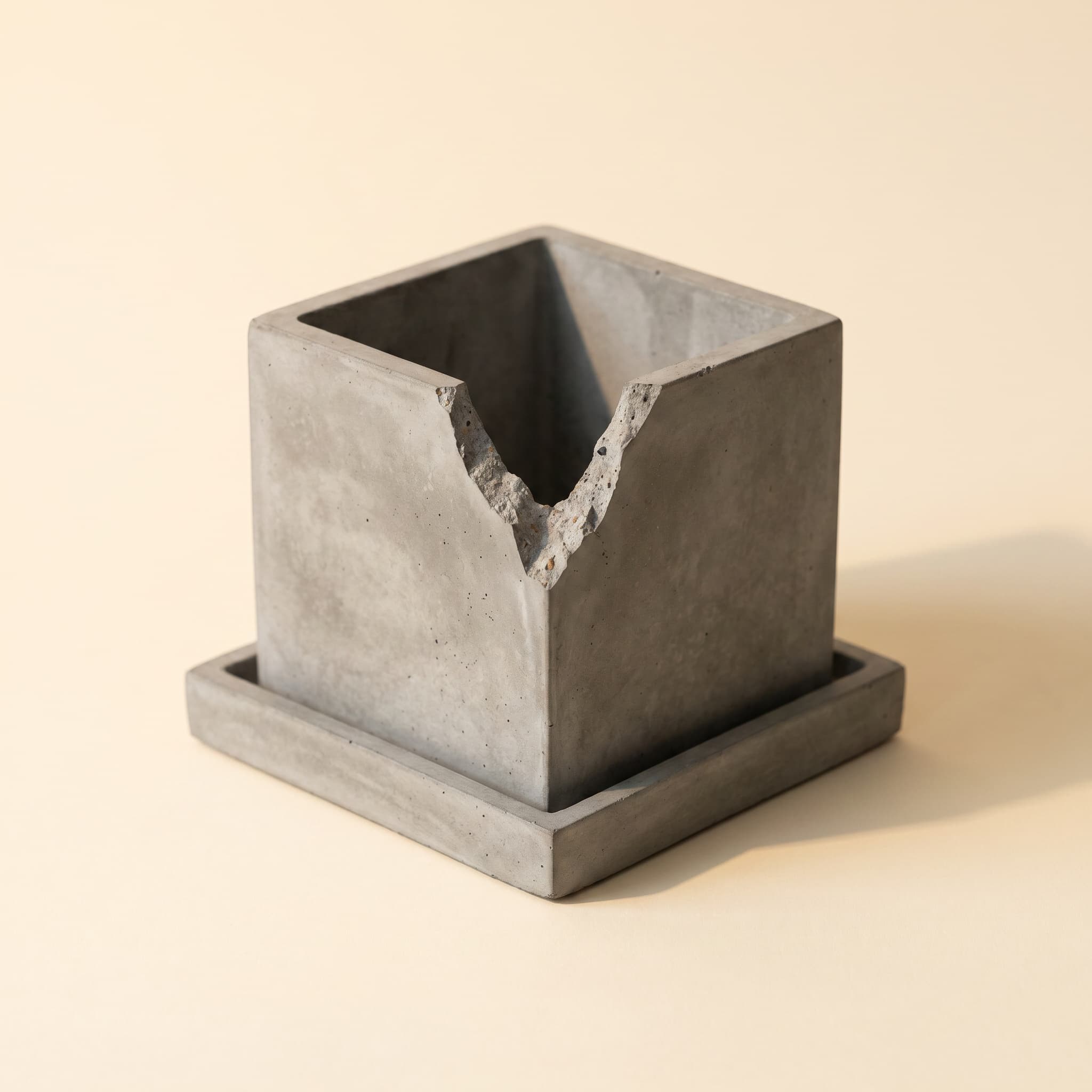
Pinholes near the rim.
Concrete entrains air as it mixes. Sometimes those tiny bubbles travel to the surface during the pour and break open at the rim. They look like small dimples, usually no wider than a grain of rice. I leave them alone.
Filling them with putty would be the wrong tell. It would say the studio is hiding the process. The pinhole is honest about how the piece was made. It is the same reason a hand-thrown ceramic shows the throwing rings on the inside of the bowl.
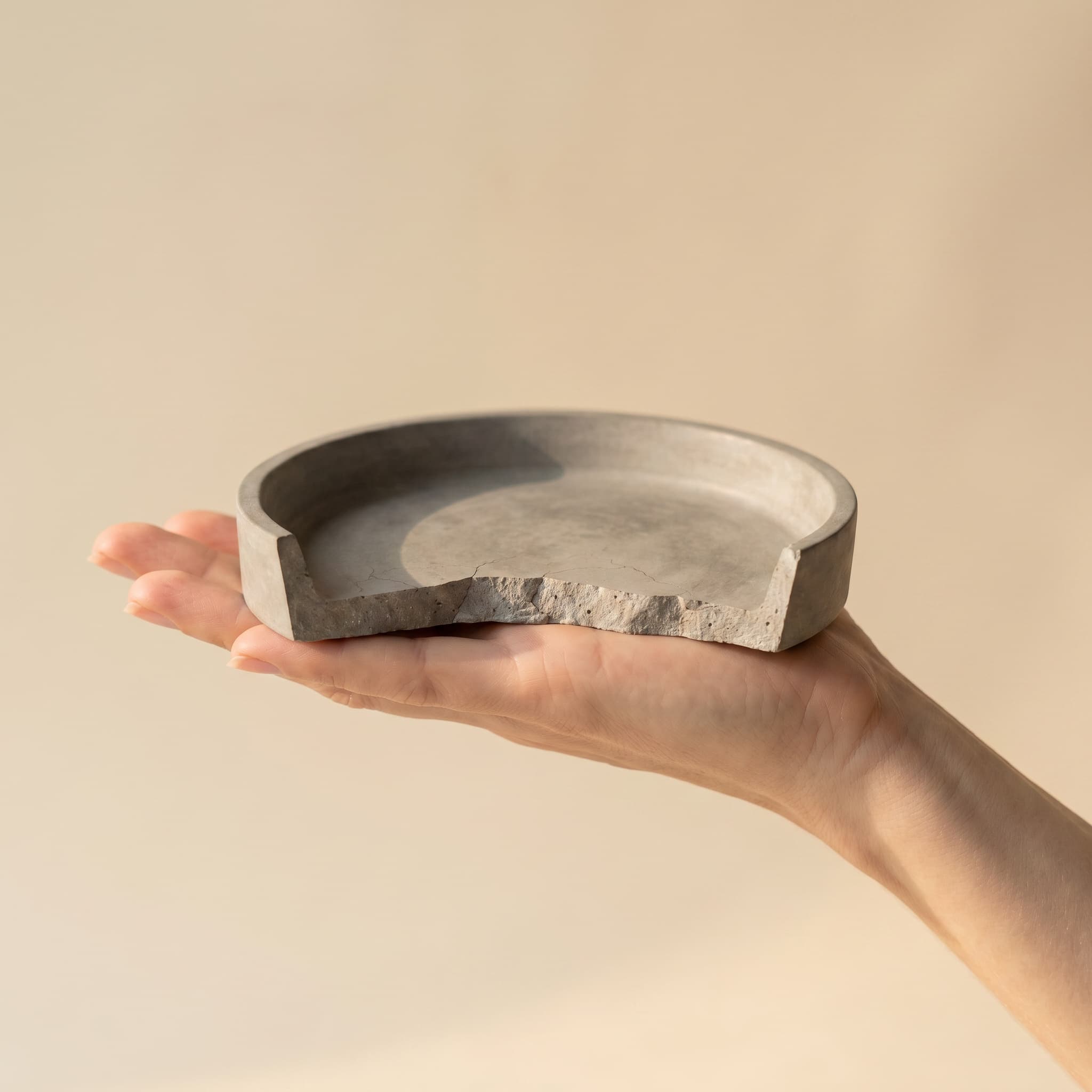
The corner that gives way.
Demoulding is the moment of held breath. You peel the silicone back one face at a time. Most days, every corner stays. Some days, a corner cracks off because the slurry was a little dry, or the mould had a memory of the last cast in it, or the piece had cured in a slightly cool corner of the studio.
When a corner goes, the piece does not go into the bin. The clean break becomes the front of the cube. The missing wedge becomes a sculptural detail. The piece is photographed, weighed, and listed as a one-of-one at a higher price than the standard range.
Not seconds. Singular.
It would be easier, commercially, to call these pieces seconds and sell them at a discount. I do not, because they are not. A second is the same piece with something wrong. A one-of-one is a different piece entirely, and I cannot make another one the same way even if I tried.
The customer who buys a one-of-one is the only person in the world with that exact shape on their shelf. That is worth more than a perfect cube, not less.
What variance is not.
Variance is not damage. Damage is a crack that runs through the wall of the vessel, a chip taken out of a face after it left the studio, a fracture that compromises the structure. If a piece arrives like that, I replace it.
Variance is the tonal shift, the pinhole, the soft corner, the slight unevenness in the way the rim catches the light. It is the small evidence that a person made the thing. I will go on making it that way.
- Rafaella