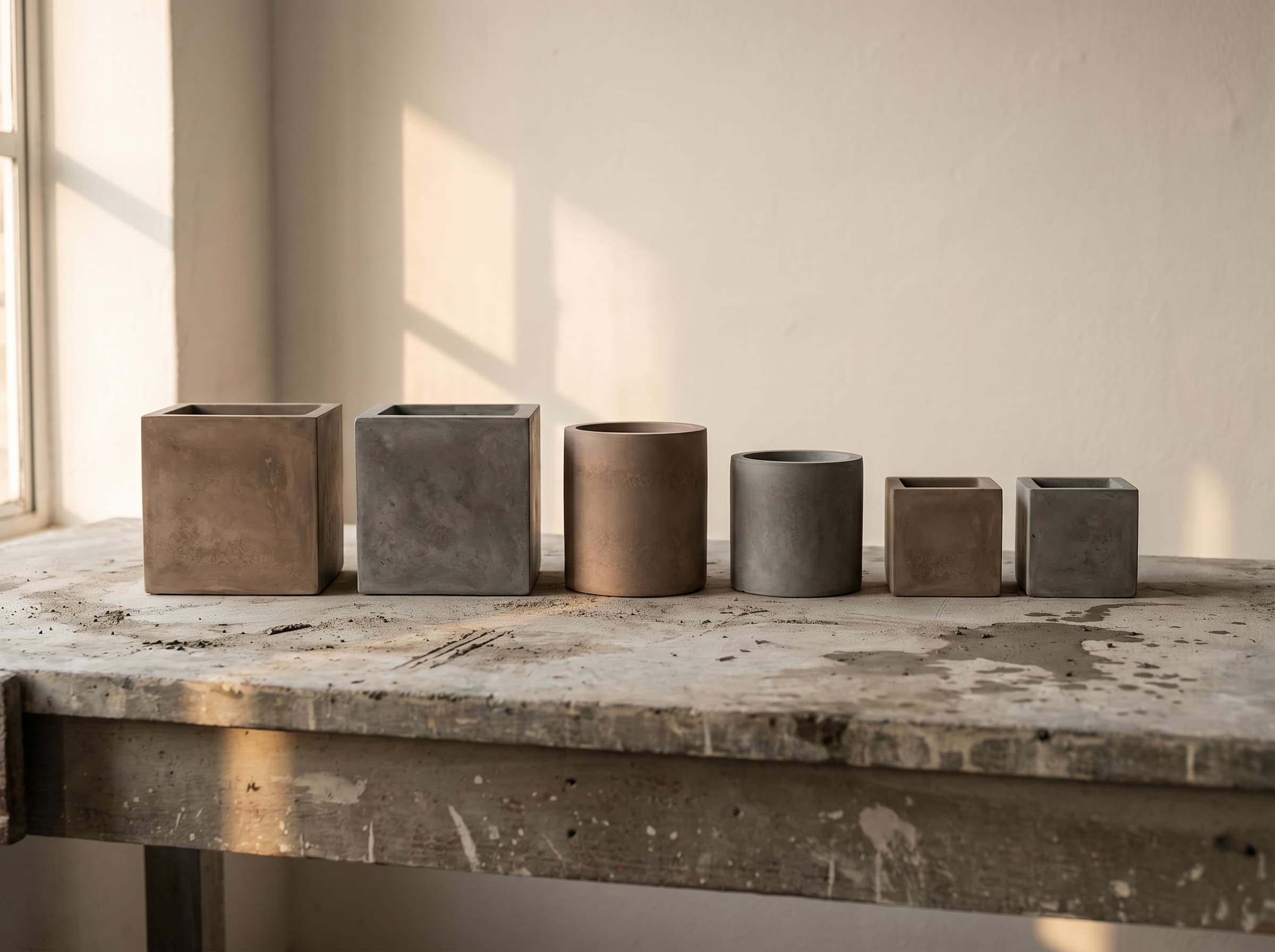
The studio is one room. A workbench along the west wall, a sink in the corner, a window that catches the late-afternoon sun. The moulds live in a low cabinet under the bench. The cement bag and the pigment jars live on a shelf above the sink. Everything fits.
The morning starts with weighing.
Every batch starts the same way. I weigh out the cement, the aggregate, and a small amount of mineral pigment in a steel bowl on a kitchen scale on the bench. The scale is the only thing I trust to be exact. The pigment is small enough that a gram either way changes the whole batch.
The mix is done by hand.
Water goes in last. I mix until the slurry holds its shape on the back of a spoon. Too dry and it crumbles in the mould. Too wet and it slumps and pinholes show through the surface. The right consistency you learn by feel, not by recipe.
The pour is the loudest moment.
I tap the moulds against the workbench to settle the slurry into the corners. The vessels look chunky and grey at this stage. They are heavier than the finished pieces by a wide margin because there is a lot of water still in the matrix.
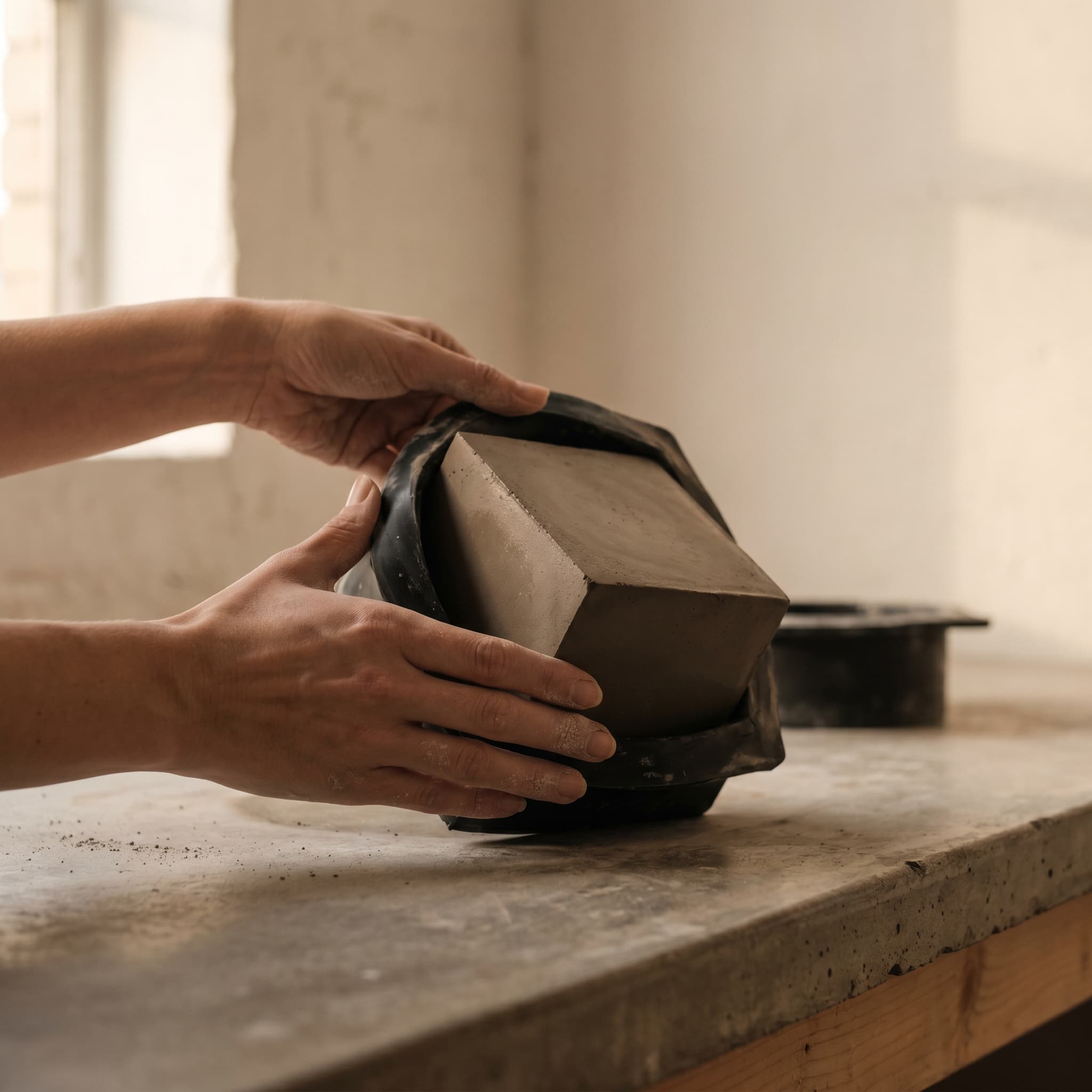
Two days later, demoulding.
The moulds peel off one face at a time. There is always a small moment of holding your breath, hoping the corners stayed put. Sometimes they do not, and that piece stays in the studio.
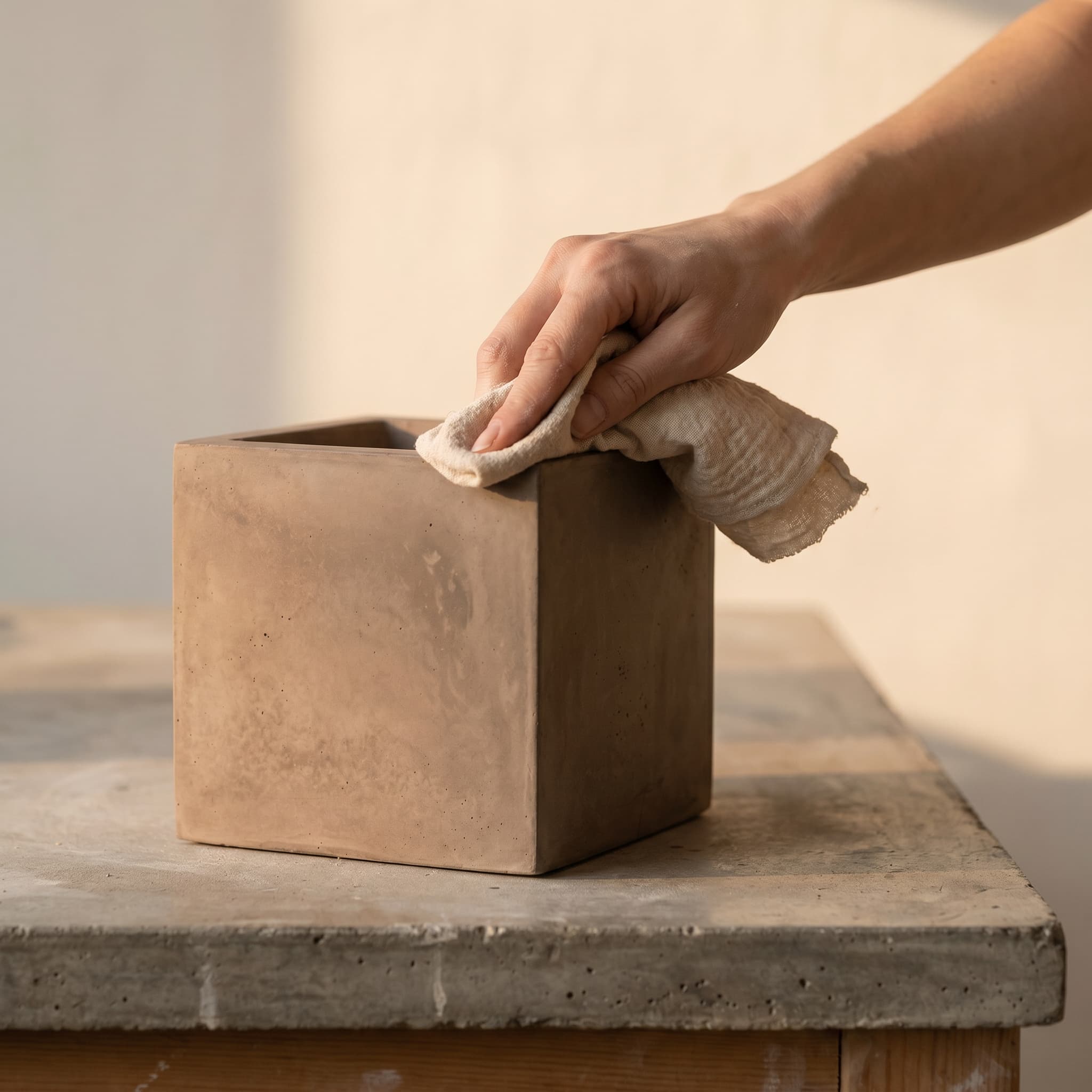
Finishing the rims.
I wipe the rims with a damp cotton cloth, just to lift the dust and sharpen the lines. Pinholes near the rim get a light pass with fine sandpaper. Tonal shifts across faces are left alone. They are the fingerprint of the day, and they are the reason no two vessels look exactly alike.
Then it sits for two weeks.
Concrete is patient. It strengthens for weeks after demoulding and goes on strengthening for years after that. Two weeks in the studio under a soft cotton sheet is the minimum I will let a piece travel. Some pieces sit longer because they need to. The work tells you when it is ready.
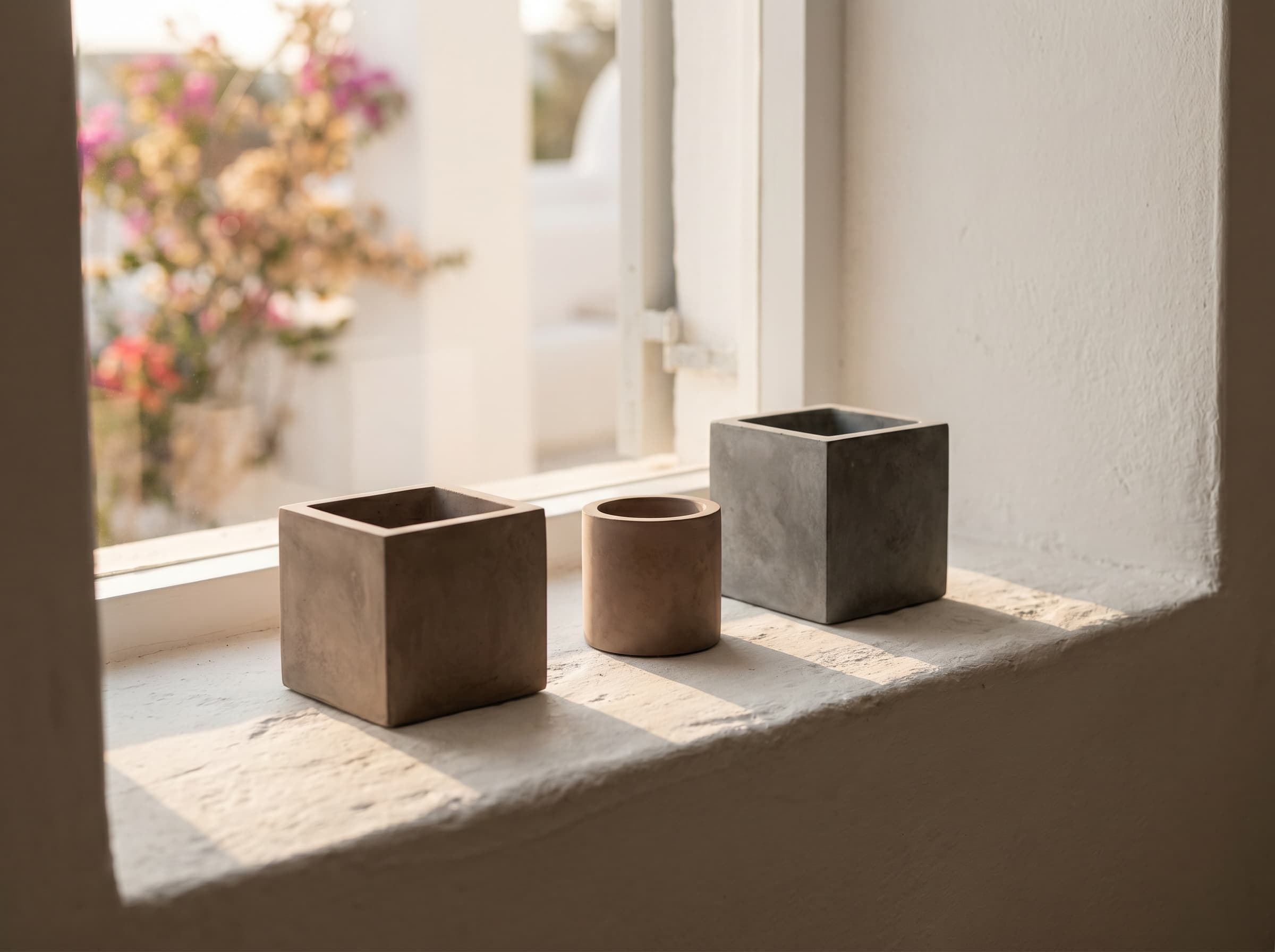
Cyprus to your door.
Each vessel is wrapped by hand in recyclable kraft paper, packed in a corrugated box sized to fit, and taken to the local post office. From Limassol it travels to the airport, then to your address across the EU or the UK. Sometimes I include a short note about the day it was demoulded.
A small piece of stone.
By the time your vessel arrives, it has been in my hands for the better part of a month. Treat it the way you would treat a small piece of stone: it can take more than you think, it likes a bit of light, and it will be there for a long time.
- Rafaella